From Range Anxiety to Pump Anxiety: Polestar's New Challenge Reveals a Deeper Financial Puzzle
Introduction
The electric vehicle (EV) industry has long battled a psychological barrier known as range anxiety—the fear that a car's battery will die before reaching a charging station. But according to Polestar CEO Michael Lohscheller, the conversation is shifting. In a recent interview with CNBC's Squawk Box Europe, Lohscheller introduced a new term: pump anxiety. This describes consumers' growing concern not about running out of power, but about the cost of refueling—whether at a gas station or a public charger. While the phrase captures a real shift in consumer sentiment, Polestar's latest balance sheet reveals a more complex story beneath the surface.
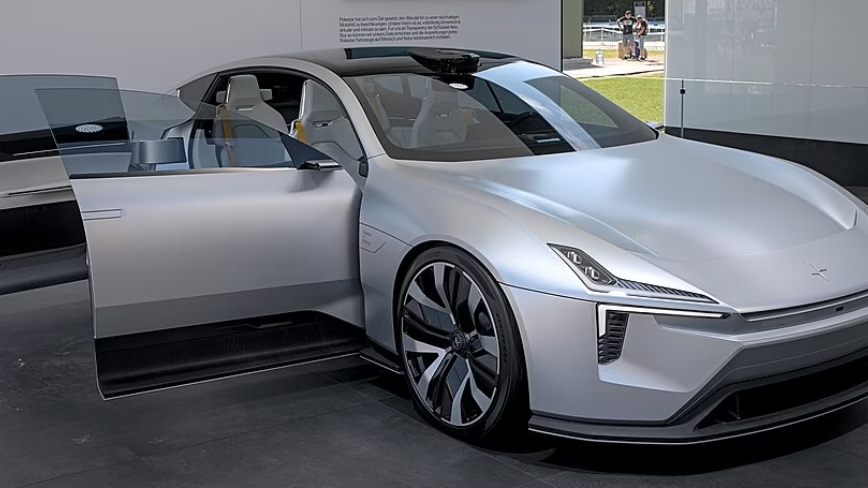
The Rise of Pump Anxiety
What is Pump Anxiety?
For years, the biggest hurdle for EV adoption was the fear of being stranded with a dead battery. But as charging infrastructure improves and battery ranges increase, a new worry has emerged: “How much will I pay at the pump — or the plug?” Lohscheller argues that pump anxiety reflects the volatility of energy prices and the uncertainty around public charging costs, which in some regions can vary widely between providers.
Why It Matters
This shift in anxiety is significant because it signals that the EV market has matured. Consumers are no longer questioning whether an EV can get them from point A to point B; they are now concerned about the total cost of ownership. Pump anxiety also highlights the need for transparent pricing and standardized charging networks—issues that industry stakeholders must address to maintain momentum.
Polestar's Financial Balancing Act
A Look at the Balance Sheet
While pump anxiety might be the buzzword of the moment, Polestar's financial statements tell a more sobering story. The Swedish EV maker, which went public via a SPAC merger in 2022, has been burning through cash as it scales production and expands its lineup. Recent quarterly reports show widening losses and negative cash flow, despite growing vehicle deliveries. The company's balance sheet reveals significant debt obligations and a reliance on external funding from its parent companies, Geely and Volvo.
Production Challenges and Market Pressures
Polestar has ambitious goals: it aims to launch the Polestar 3 SUV and Polestar 4 coupe-SUV, targeting a five-fold increase in sales by 2025. Yet, production delays and supply chain disruptions have hampered progress. Meanwhile, legacy automakers and new entrants like Tesla, BYD, and Rivian are saturating the premium EV segment, squeezing margins. The company's ability to achieve profitability hinges on ramping up volumes while controlling costs—a delicate balance that its balance sheet reflects.

Beyond the Headlines: The Real Story
Pump Anxiety as a Symptom
Lohscheller's framing of pump anxiety is clever marketing, but it masks deeper financial strains. If consumers are worried about charging costs, that could dampen demand for Polestar vehicles, especially in price-sensitive markets. To combat this, the company must offer competitive pricing, warranty programs, or energy packages that alleviate consumer fears. However, with limited cash reserves, Polestar may find it difficult to underwrite such incentives.
Investor Sentiment and Future Outlook
Investors have taken notice. Polestar's stock has declined significantly since its debut, reflecting skepticism about its path to profitability. The company's balance sheet shows increasing current liabilities and a reliance on short-term financing. While pump anxiety is a real consumer issue, the more pressing concern for Polestar's stakeholders is capital anxiety—the fear that the company may need to raise more funds through dilutive offerings or debt.
Conclusion
The narrative around EVs is evolving: from “Will I run out of charge?” to “Will charging break my budget?” Polestar CEO Michael Lohscheller deserves credit for identifying this shift. But as his own company's financial documents show, the challenge is twofold. Addressing pump anxiety requires infrastructure improvements and pricing transparency, while fixing the balance sheet calls for operational discipline and strategic execution. The next few quarters will be critical for Polestar to prove that it can navigate both the public's new fears and its own fiscal reality.
Interested in more EV industry analysis? Check out our sections on Pump Anxiety and Polestar's Finances.