7 Astonishing Facts About Trinitite Crystals from the Trinity Test
The world's first nuclear bomb test, code-named Trinity, not only changed the course of history but also created a strange material called trinitite. Formed on July 16, 1945, when the bomb's intense heat melted desert sand into green glass, trinitite has long fascinated scientists. But recent studies have revealed something extraordinary: within this glass are crystals so unusual they challenge our understanding of how matter is structured. Known as quasicrystals with forbidden symmetry, these formations are unlike anything found in nature or previous experiments. Here are seven facts you need to know about these extreme crystals and their remarkable origin story.
1. What Is Trinitite and Where Did It Come From?
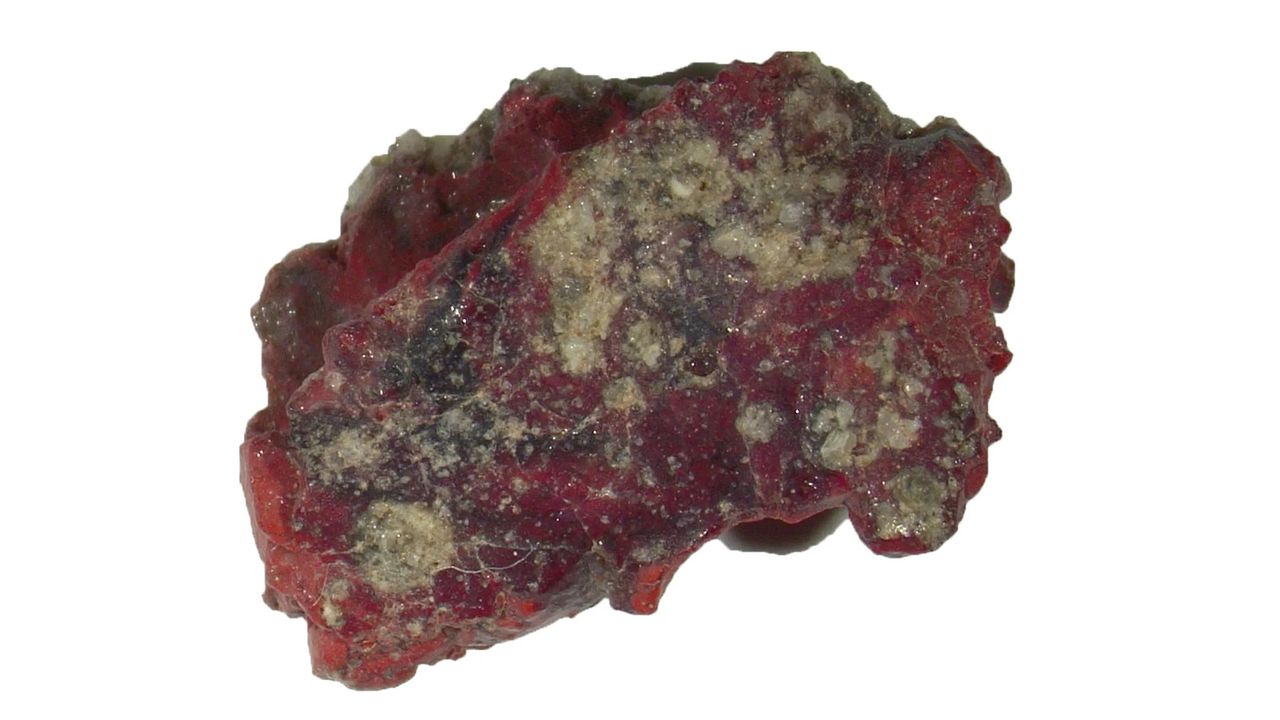
Trinitite is the glassy residue left after the Trinity nuclear test at the Alamogordo Bombing Range in New Mexico. When the Gadget—the plutonium implosion device—detonated, it produced a fireball with temperatures exceeding 8,000°C (14,432°F). This extreme heat instantly fused the surrounding quartz-rich sand into a jade-green silica glass. The material was named trinitite after the test site. For decades, collectors and researchers studied this glass, but only recently did advanced imaging reveal that trinitite contains minuscule crystals with unprecedented atomic arrangements. These crystals are embedded within the glass matrix, preserved by rapid cooling. Understanding trinitite helps scientists grasp how matter behaves under extreme conditions, such as those found in nuclear explosions or even on other planets.
2. The Discovery of Forbidden Quasicrystals Inside Trinitite
In 2021, a team led by Luca Bindi, a mineralogist at the University of Florence, examined trinitite samples using transmission electron microscopy. They found tiny grains—just a few micrometers across—exhibiting icosahedral symmetry, a type of quasicrystal that was once thought impossible in natural materials. Icosahedral quasicrystals have five-fold rotational symmetry, which cannot occur in conventional crystals due to the rules of crystallography. This breakthrough marked the first time a quasicrystal had been artificially created via a nuclear explosion. The discovery was published in the Proceedings of the National Academy of Sciences (PNAS) and confirmed that the Trinity test produced a previously unknown form of matter. It also proved that quasicrystals can form under sudden, extreme heat and pressure, expanding our understanding of crystal genesis.
3. How Extreme Conditions Molded These Unique Crystals
The formation of trinitite's quasicrystals required a perfect storm of physical forces. The nuclear blast generated temperatures hot enough to vaporize sand, then within seconds the molten material cooled in a high-pressure shockwave. This rapid cooling—known as quenching—prevented atoms from arranging into a regular lattice. Instead, they formed a quasiperiodic pattern, a non-repeating but ordered structure. The presence of aluminum, iron, and other elements from the bomb itself may have helped stabilize the icosahedral phase. Unlike natural quasicrystals, which form over geological timescales in meteorite impacts, trinitite's crystals solidified in mere moments. Scientists believe that understanding this process could lead to new methods for synthesizing quasicrystals in laboratories, with potential applications in materials science and nanotechnology.
4. Atomic Structure: A Challenge to Traditional Crystallography
Traditional crystals have a repeating three-dimensional lattice, like a stack of identical boxes. Quasicrystals, however, break this pattern. The trinitite quasicrystals exhibit icosahedral symmetry—think of a soccer ball or a virus capsid—with 20 triangular faces. This arrangement cannot be repeated to fill space, yet the atoms lock into a stable, non-repeating order. The discovery in trinitite includes not just one but several different quasicrystal phases, each with unique atomic configurations. Some contain clusters that resemble decagonal patterns, while others show mixed symmetries. This diversity suggests that the extreme environment of a nuclear detonation can spawn a family of novel structures. These findings force scientists to rethink the limits of crystal design and how order emerges from chaos.
5. Implications for Materials Science and Technology
The trinitite quasicrystals are not just a scientific curiosity; they have practical implications. Quasicrystals are known for their low friction, high corrosion resistance, and unique electronic properties. For example, they are used in non-stick coatings and surgical instruments. The Trinity test crystals may offer insights into creating materials that can withstand extreme temperatures and pressures. Additionally, the method of rapid quenching in a nuclear blast could inspire new industrial processes for producing quasicrystalline alloys. By studying the precise atomic structure of trinitite, researchers hope to design materials with tailored properties, such as stronger ceramics or more efficient catalysts. The comparison with other impact glasses also helps distinguish formation pathways.
6. How Trinitite Compares to Other Explosion and Impact Glasses
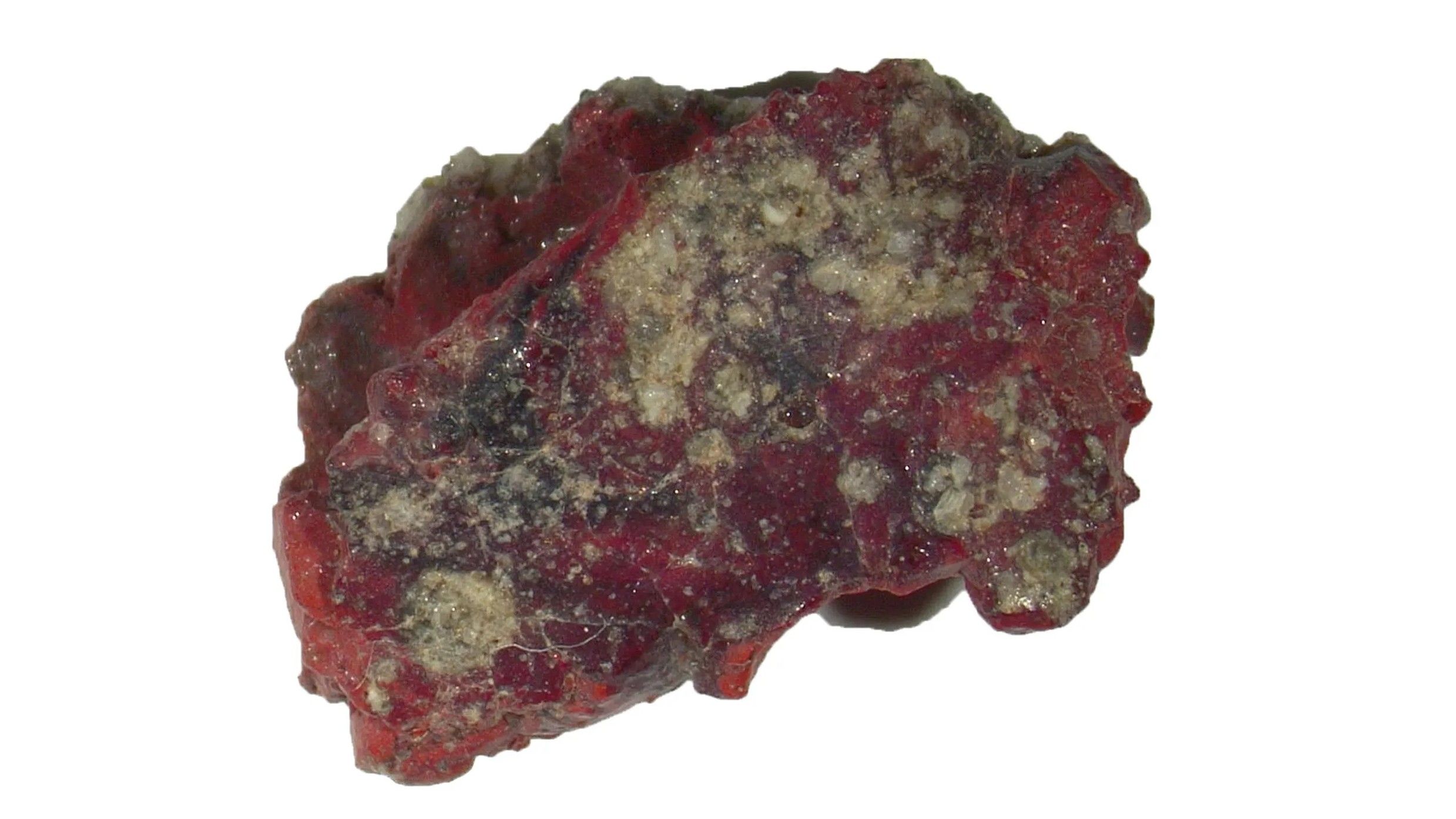
Trinitite is not the only glass formed by extreme events. Impact glasses, such as those from meteorite craters (e.g., the Ries crater in Germany), also contain unusual crystalline phases. However, the quasicrystals in trinitite are distinct because they formed from a nuclear detonation rather than a celestial impact. Impact glasses typically cool more slowly, allowing conventional crystals to grow. In contrast, the rapid cooling of trinitite favored quasiperiodic order. Another difference is the composition: trinitite incorporates radioactive isotopes from the bomb, such as plutonium-239 and cesium-137, embedding a unique signature. This makes trinitite valuable for forensic nuclear science and for studying the behavior of radionuclides in extreme environments. The comparison highlights how different energy sources yield unique materials.
7. Future Research: Unlocking Trinitite's Secrets
Scientists are just beginning to unravel the mysteries of trinitite's crystals. Future studies will use more advanced microscopy and X-ray diffraction to map the exact positions of atoms in these quasicrystals. There is also interest in searching for other rare phases within the glass, such as metallic glasses or high-pressure polymorphs. Because trinitite is becoming scarcer—collecting it from the site is now restricted—researchers are working with existing museum samples. The findings could also inform the search for quasicrystals in other extreme environments, such as lightning strikes (fulgurites) or volcanic lightning. Ultimately, trinitite serves as a frozen record of a pivotal moment in human history, and its crystals offer a window into the fundamental nature of matter under the most violent conditions imaginable.
In conclusion, the 'extreme' crystals hidden within trinitite are far more than a historical artifact. They represent a new frontier in materials science, challenging our understanding of atomic order and opening doors to novel technologies. From forbidden symmetries to potential industrial applications, these microscopic structures encapsulate the power of transformation under pressure. As research continues, trinitite will likely yield even more surprises, reminding us that even in the aftermath of destruction, nature—and science—can find unexpected beauty.